Why the Same Street Changes Colour Through the Day
Why the same street changes colour through the day: learn when light suits your plans and how to compare one view without mistaking shadow for paint.
The common mistake on a bright walk is to treat a street’s first impression as its permanent palette. That can send you past a warm stone lane because it looks gray at noon, or leave you wondering why a familiar facade seems amber later. Why the same street changes colour through the day comes down largely to the direction and softness of daylight, and noticing that change can make a walk more deliberate.
Light, not a repaint
Buildings and paving reflect the light that reaches them. A wall facing the sun may look warmer and more vivid than the same wall turned away from it. In shade, the direct beam disappears, and the surface can appear cooler, duller, or less distinct. The material has not changed; its illumination has.
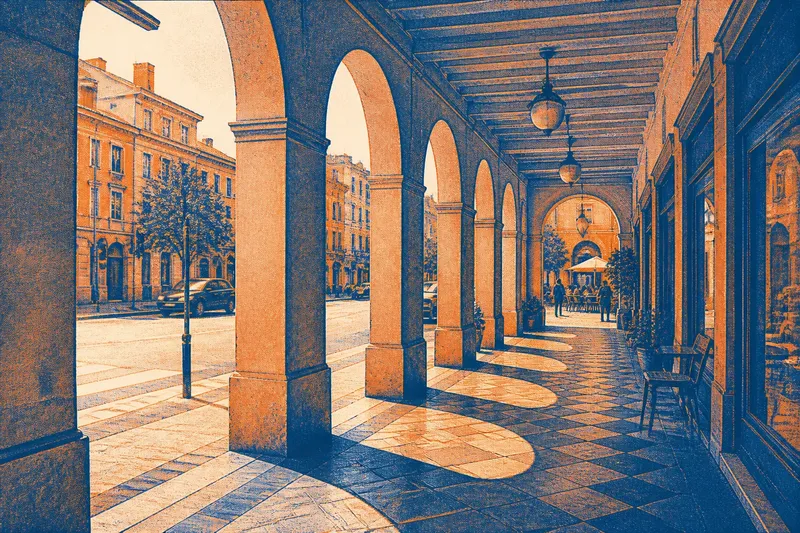
The light’s angle matters as much as its warmth. Low, sideways sunlight skims across brick, rough plaster, carved stone, and uneven paving. Small ridges catch light while recesses hold shadow, so texture becomes part of the apparent color. When the sun is higher, light tends to land more directly on upward-facing surfaces and can flatten some of those differences.
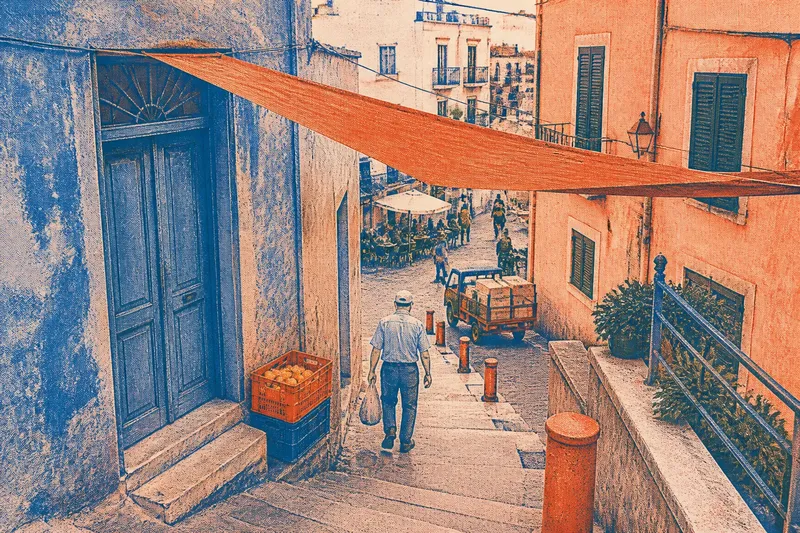
Clouds soften the transition. A thin cloud may reduce harsh contrast while leaving the street bright; a heavy cloud can make colors feel more even and muted. Nearby walls, awnings, trees, and shop windows also block or reflect light. A red canopy can tint the pavement beneath it, while a pale stone facade may bounce warm light onto a darker wall.
Choose by your plans
There is no universally best hour to see a street. Pick the conditions that suit what you want to notice.
- For surface texture: Look when sunlight reaches the street from the side. Brick joints, worn steps, and rough stone are easier to distinguish when light and shadow cross their surfaces.
- For an even look: Choose bright overcast conditions or a street in open shade. The contrast between sunlit walls and dark doorways is less severe, so neighboring colors can be compared more easily.
- For warm facades: Visit when the sun reaches the face of the building you care about. A sunlit wall can appear warmer than it does in shade, especially where its surface is pale or textured.
- For painted details: Seek steady, indirect light if you want to notice the paint itself rather than the drama of shadows. Door colors, trim, and signs may read more evenly away from direct glare.
- For a quiet stroll: Let convenience decide. A street seen in ordinary midday light still has useful detail; there is little sense in rearranging a whole day to catch one brief patch of sun.
These are tendencies, not appointments. A narrow street can remain shaded even when nearby squares are bright. The side of the block, the season, clouds, and surrounding buildings all alter what reaches a particular wall.
Compare one view twice
To see the change clearly, choose a view with a few stable features: a colored doorway, a pale wall, a stretch of paving, and perhaps a tree or awning. Notice the sun’s direction and whether the view is in direct light, open shade, or a mixture. Return at another time, ideally when the direction of light has shifted, and look from roughly the same spot.
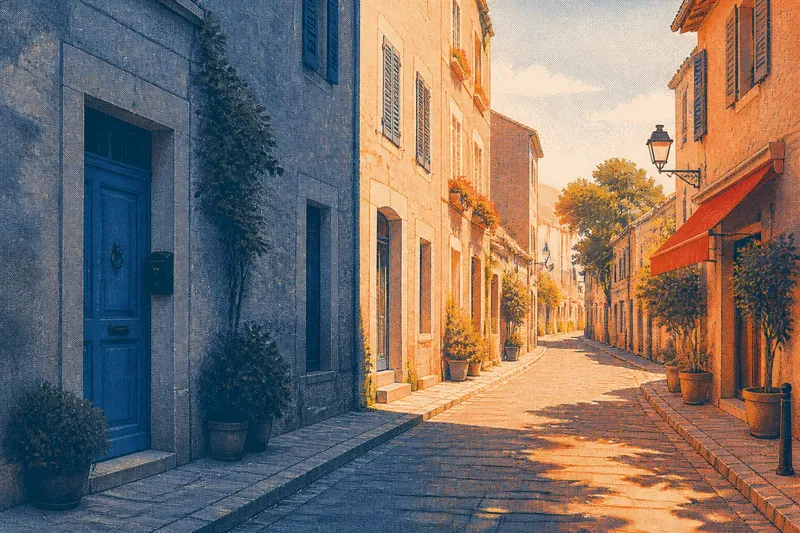
Say you are staying near a narrow lane with a blue door and a cream-colored facade. On your morning walk, the lane is shaded, and both surfaces look subdued. Later, you pass the same doorway when sunlight reaches the upper facade but not the door; the cream wall looks warmer, while the blue remains cool and the paving shows sharper patches of light. The useful observation is not that one visit revealed the “real” colors. It is that each condition made different parts of the street more noticeable.
You do not need a camera or notes, though a quick phone photo can help you remember where you stood. If you photograph the scene, keep your position and framing similar. Automatic exposure and screen settings can alter how a picture looks, so use it as a prompt for observation rather than a faithful record of paint color.
When does light help?
Why does shade look blue?
Open shade often receives more light from the sky than from direct sun, so a surface can appear cooler. Nearby walls and reflected light can shift that impression, and shade does not have one fixed color.
Is morning always warmer?
No. The apparent warmth depends on which side of the street receives sunlight, the weather, and the surrounding surfaces. A shaded morning lane may look cooler than the same facade in direct afternoon light.
When should I revisit a street?
Return when the sunlight reaches a different face or when the street moves between direct light and shade. If the sky is overcast both times, compare the areas that become exposed or sheltered rather than expecting a dramatic shift.
Does a photo show the true color?
A photograph records a particular mix of light, camera processing, and screen display. It can help compare the arrangement of light and shade, but the colors on a screen may not match what your eyes noticed on the street.
What not to chase
It is not worth waiting for a perfectly clear sky, tracking the sun with an app, or circling a block until every wall gets its own spotlight. Those efforts can turn a pleasant walk into a small logistical department. A glance at the street’s shaded side and the direction of the brighter patches is usually enough to decide whether another visit would add something.
For a traveler choosing between a quick pass and a return, ask what the first visit failed to show. If you saw the street in flat shade and want to understand its textures, another visit in side light may be worthwhile. If you mainly wanted to know how to find the station, the street has already done its job.
The same street changes colour through the day, but the shift is most useful when you know what you are looking for: texture, warm walls, or a quieter view of painted details. Let the route and your attention set the timing, then leave room for the light to make its own modest edits.